




What are the differences between parallel and serial communication for an LCD Character Display Module?
 Oct 08, 2025|
 As a supplier of LCD Character Display Modules, I've witnessed firsthand the significance of understanding the differences between parallel and serial communication in these modules. This knowledge is crucial for customers to make informed decisions when selecting the most suitable display solution for their applications. In this blog, I'll delve into the key differences between parallel and serial communication for LCD Character Display Modules, exploring their advantages, disadvantages, and typical use cases.
1. Basics of Parallel and Serial Communication
Before we dive into the differences, let's briefly understand what parallel and serial communication mean in the context of LCD Character Display Modules.
Parallel communication involves transferring multiple bits of data simultaneously over multiple data lines. For example, in an 8 - bit parallel communication system, 8 bits of data are sent at the same time. This allows for fast data transfer rates as large chunks of data can be moved quickly.
Serial communication, on the other hand, transfers data one bit at a time over a single data line. It is a sequential process where each bit follows the previous one. While it may seem slower compared to parallel communication on the surface, serial communication has its own set of advantages.
2. Signal Lines and Complexity
One of the most obvious differences between parallel and serial communication is the number of signal lines required.
In parallel communication, a significant number of signal lines are needed. For an 8 - bit parallel interface, at least 8 data lines are required, along with additional control lines for functions such as read/write operations and chip selection. This increases the complexity of the wiring and the overall design of the system. More signal lines also mean a larger PCB footprint, which can be a drawback in applications where space is limited.
Serial communication, in contrast, uses far fewer signal lines. A basic serial interface typically requires only two lines: one for transmitting data (TX) and one for receiving data (RX). Some serial protocols may also use additional control lines, but the overall number is significantly less than in parallel communication. This simplicity in wiring reduces the complexity of the system design and allows for more compact PCB layouts.
3. Data Transfer Speed
Parallel communication is generally known for its high data transfer speed. Since multiple bits are transferred simultaneously, large amounts of data can be moved quickly. This makes it suitable for applications where real - time data display is required, such as in industrial control systems or high - speed data logging devices.
However, the speed advantage of parallel communication is not without limitations. As the clock frequency increases, issues such as signal skew and electromagnetic interference (EMI) become more prominent. Signal skew occurs when the propagation delays of different data lines are not the same, causing the data bits to arrive at different times. EMI can also disrupt the signal integrity, leading to errors in data transfer.
Serial communication, although it transfers data one bit at a time, can achieve relatively high data transfer rates in modern systems. High - speed serial protocols such as USB and Ethernet can transfer data at speeds comparable to or even higher than parallel communication in some cases. Additionally, serial communication is less susceptible to signal skew and EMI because there is only one data line, which simplifies the signal routing and reduces electromagnetic radiation.
4. Cost
Cost is an important factor to consider when choosing between parallel and serial communication for LCD Character Display Modules.
Parallel communication requires more components, such as buffer chips and drivers, to handle the multiple data lines. The increased number of signal lines also means more expensive PCB manufacturing, as more layers and traces are needed. This makes parallel communication generally more costly than serial communication.
Serial communication, with its simpler wiring and fewer components, is more cost - effective. The reduced PCB complexity also leads to lower manufacturing costs. For budget - sensitive applications, serial communication is often the preferred choice.
5. Compatibility and Standardization
Serial communication has become increasingly popular due to its high level of compatibility and standardization. There are many well - established serial protocols, such as RS - 232, SPI, and I2C, which are widely supported by microcontrollers, sensors, and other electronic devices. This makes it easier to integrate LCD Character Display Modules with other components in a system.
Parallel communication, on the other hand, is less standardized. Different manufacturers may use different parallel interfaces, which can lead to compatibility issues. This lack of standardization can make it more difficult to find replacement parts or upgrade the system in the future.
6. Typical Use Cases
The choice between parallel and serial communication depends on the specific requirements of the application.
Parallel Communication Use Cases
- Industrial control systems: In industrial environments, real - time data display is crucial. Parallel communication can quickly transfer large amounts of data, such as sensor readings and control commands, to the LCD display for monitoring and control.
- High - speed data acquisition: Applications that require high - speed data logging, such as in scientific research or automotive testing, benefit from the fast data transfer speed of parallel communication.
Serial Communication Use Cases
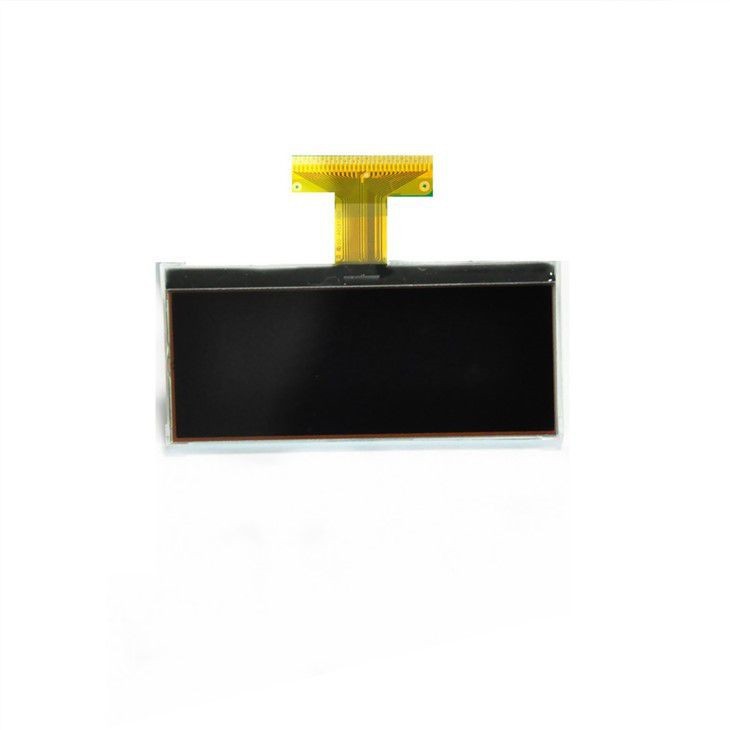

- Consumer electronics: Devices such as smartphones, tablets, and smartwatches often use serial communication due to its low power consumption, compact size, and cost - effectiveness. For example, the I2C protocol is commonly used to interface LCD displays with microcontrollers in these devices.
- Medical equipment: LCD Screen Module For Medical Equipment often require reliable and cost - effective communication interfaces. Serial communication, with its simplicity and compatibility, is a popular choice for these applications.
- IoT devices: The Internet of Things (IoT) is characterized by a large number of interconnected devices with limited power and space. Serial communication is well - suited for IoT applications, as it allows for efficient data transfer between devices and sensors.
7. Our Product Offerings
As a supplier of LCD Character Display Modules, we offer both parallel and serial communication options to meet the diverse needs of our customers. Our Standard Graphic Low Power Monochrome LCD is available with both parallel and serial interfaces, providing flexibility for different applications. Our Electronic Graphic LCD Display also supports multiple communication protocols, allowing customers to choose the most suitable option for their specific requirements.
If you're looking for an LCD Character Display Module for your project, we're here to help. Our team of experts can provide technical support and guidance to ensure you select the right module with the appropriate communication interface. Whether you need high - speed data transfer or a cost - effective solution, we have the products and expertise to meet your needs.
8. Contact Us for Procurement
We invite you to reach out to us for procurement discussions. Our sales team is ready to answer your questions, provide detailed product information, and offer competitive pricing. Whether you're a small - scale project developer or a large - scale manufacturer, we can work with you to find the best LCD Character Display Module solution for your application.
References
- "Communication Systems" by Simon Haykin
- "Microcontroller Based System Design" by Muhammad Ali Mazidi