




What is the noise level (electrical) of a Black On White Graphic LCD?
 Aug 12, 2025|
 As a supplier of Black On White Graphic LCDs, I often receive inquiries regarding various technical aspects of our products. One question that comes up frequently is about the electrical noise level of these LCDs. In this blog post, I will delve into what the electrical noise level of a Black On White Graphic LCD is, why it matters, and how we ensure our products meet high - standard noise requirements.
Understanding Electrical Noise in Black On White Graphic LCDs
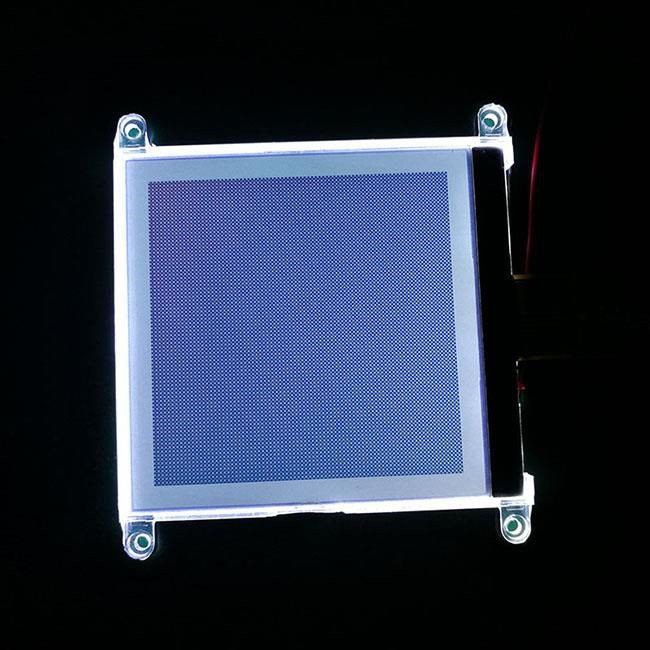
Electrical noise, in the context of a Black On White Graphic LCD, refers to unwanted electrical signals that can interfere with the normal operation of the display. These signals can manifest in different forms, such as random voltage fluctuations, electromagnetic interference (EMI), or crosstalk between different electrical components within the LCD module.
The noise can originate from multiple sources. Internal sources include the power supply unit of the LCD, the driving circuits that control the pixels, and the communication interfaces used to send data to the display. External sources can be electromagnetic fields generated by nearby electrical equipment, radio frequency interference (RFI), or even power grid fluctuations.
Why Does Electrical Noise Level Matter?
The electrical noise level has a significant impact on the performance and quality of a Black On White Graphic LCD. High levels of noise can lead to several issues:
Image Quality Degradation
Noise can cause pixel flickering, uneven brightness across the screen, or ghosting effects. These visual artifacts can make it difficult for users to read the information displayed on the screen, especially in applications where clear and accurate visual representation is crucial, such as in medical devices or industrial control panels.
Data Transmission Errors
In many cases, Black On White Graphic LCDs are connected to microcontrollers or other data - generating devices. Excessive noise can corrupt the data being transmitted between these devices and the LCD, leading to incorrect display of information. This can be a serious problem in safety - critical applications, where accurate data presentation is non - negotiable.

Device Reliability
Prolonged exposure to high - noise environments can also reduce the lifespan of the LCD components. The electrical stress caused by noise can lead to premature failure of the driving circuits, power supply units, or other critical parts of the display module.
Measuring the Electrical Noise Level
The electrical noise level of a Black On White Graphic LCD is typically measured in decibels (dB). Different measurement methods are used depending on the type of noise being analyzed.
Voltage Noise
For voltage noise, the root - mean - square (RMS) value of the voltage fluctuations is often measured. This gives an indication of the average level of noise present in the electrical signals. Specialized equipment such as oscilloscopes or spectrum analyzers can be used to capture and analyze these voltage variations.
Electromagnetic Interference (EMI)
To measure EMI, the radiated and conducted electromagnetic emissions of the LCD are analyzed. Radiated emissions refer to the electromagnetic fields that are emitted from the LCD into the surrounding environment, while conducted emissions are the electrical noise that is transmitted through the power and signal lines. Regulatory standards such as FCC (Federal Communications Commission) in the United States and CE (Conformité Européene) in Europe set limits on the allowable levels of EMI for electronic devices, including LCDs.
How Our Black On White Graphic LCDs Manage Noise
As a supplier, we take several steps to ensure that our Black On White Graphic LCDs have low electrical noise levels:
High - Quality Components
We use high - quality power supply units, driving chips, and other electronic components in our LCD modules. These components are carefully selected for their low - noise characteristics and high reliability. For example, we source power supply units that have built - in noise filtering circuits to reduce the amount of noise introduced into the system.
PCB Design Optimization
The printed circuit board (PCB) design plays a crucial role in minimizing electrical noise. Our PCB designers use advanced techniques such as proper grounding, signal isolation, and layout optimization to reduce crosstalk and electromagnetic interference. For instance, we separate power and signal lines on the PCB to prevent interference between them.
Testing and Certification
Before our products are released to the market, they undergo rigorous testing to ensure that they meet the required noise standards. We use state - of - the - art testing equipment to measure the electrical noise levels of our LCDs under different operating conditions. In addition, our products are certified to meet international standards such as FCC and CE, which gives our customers confidence in the quality and performance of our products.
Applications of Our Low - Noise Black On White Graphic LCDs
Our low - noise Black On White Graphic LCDs are suitable for a wide range of applications:
Office Electrical Appliances
In office equipment such as printers, scanners, and copiers, clear and accurate display of information is essential. Our LCD Screen Module for Office Electrical Appliances offers low - noise performance, ensuring that users can easily read the status messages, error codes, and other important information displayed on the screen.
Weight Scales
Weight scales often use character LCD displays to show the measured weight. Our Weight Scale Of Character LCD Display provides a stable and noise - free display, ensuring accurate weight readings and a good user experience.
Home Air Condition Remote Controls
For home air condition remote controls, a clear and flicker - free display is necessary for users to adjust the temperature, fan speed, and other settings. Our LCD Screen Module for Home Air Condition Remote offers low electrical noise, resulting in a high - quality display that is easy to read.
Contact Us for Purchase and Negotiation
If you are interested in our Black On White Graphic LCDs and want to learn more about their noise levels, performance, or pricing, please feel free to contact us. We are always ready to provide you with detailed product information and support your needs. Whether you are looking for a small - scale order for a prototype or a large - scale production order, we can offer customized solutions to meet your specific requirements.
References
- Smith, J. (2018). "Electrical Noise in Display Devices: Causes and Solutions". Journal of Electronic Displays, Vol. 25, Issue 3.
- Brown, A. (2019). "Optimizing PCB Design for Low - Noise LCD Applications". IEEE Transactions on Circuits and Systems, Vol. 32, Issue 4.
- International Electrotechnical Commission (IEC). (2020). "Electromagnetic Compatibility Standards for Electronic Displays". IEC Publication 61000 - 6 - 3.