




Is a 1.3 Inch TFT Square Screen suitable for virtual reality applications?
 Jun 03, 2025|
 In recent years, virtual reality (VR) has emerged as a revolutionary technology, transforming the way we experience digital content. From immersive gaming to educational simulations, VR offers a wide range of applications that captivate users with its realistic and interactive environments. As a supplier of 1.3-inch TFT square screens, I am often asked whether our product is suitable for VR applications. In this blog post, I will explore the potential of 1.3-inch TFT square screens in the VR space, discussing their advantages, limitations, and real-world use cases.
Advantages of 1.3-Inch TFT Square Screens for VR
One of the primary advantages of 1.3-inch TFT square screens in VR applications is their compact size. VR headsets are designed to be worn on the head, and users expect them to be lightweight and comfortable. A smaller screen can contribute to a more ergonomic design, reducing the overall weight and bulk of the headset. This is particularly important for extended use, as users are less likely to experience fatigue or discomfort.
Another benefit of 1.3-inch TFT square screens is their high pixel density. These screens typically offer a resolution of 480x480 pixels or higher, which translates to sharp and clear visuals. In VR, where the user's immersion depends on the quality of the graphics, a high-resolution screen can make a significant difference. It allows for more detailed textures, smoother lines, and a more realistic overall experience.
In addition to their size and resolution, 1.3-inch TFT square screens also offer fast response times. This is crucial in VR, where rapid changes in the visual environment are common. A fast response time ensures that there is no noticeable lag between the user's movements and the corresponding changes on the screen, resulting in a more seamless and immersive experience.
Limitations of 1.3-Inch TFT Square Screens for VR
While 1.3-inch TFT square screens offer several advantages for VR applications, they also have some limitations. One of the main challenges is the limited field of view (FOV). In VR, a wider FOV is generally preferred, as it provides a more immersive experience. However, due to their small size, 1.3-inch screens may not be able to offer a very wide FOV, which can limit the user's sense of presence in the virtual environment.
Another limitation is the potential for a lower brightness and contrast ratio compared to larger screens. In VR, where the user is often in a dark environment, a high brightness and contrast ratio are important for clear and vivid visuals. While 1.3-inch TFT square screens can offer decent brightness and contrast, they may not be able to match the performance of larger screens in this regard.
Finally, the small size of 1.3-inch TFT square screens can also make it more difficult to integrate additional features, such as touch sensors or eye-tracking technology. These features can enhance the interactivity and functionality of VR applications, but they may require more space and resources than a 1.3-inch screen can provide.
Real-World Use Cases
Despite their limitations, 1.3-inch TFT square screens have found some niche applications in the VR space. One example is in VR glasses for mobile devices. These glasses are designed to be used with smartphones, and they typically feature a simple and lightweight design. A 1.3-inch TFT square screen can be a good fit for these glasses, as it provides a compact and affordable solution for delivering VR content.
Another use case is in VR training simulations. In some industries, such as aviation or healthcare, VR training simulations are used to provide realistic and immersive training experiences. A 1.3-inch TFT square screen can be used in these simulations to provide a high-resolution display of the training environment, allowing trainees to practice their skills in a safe and controlled setting.
Comparison with Other Screen Sizes
To better understand the suitability of 1.3-inch TFT square screens for VR applications, it is helpful to compare them with other screen sizes. For example, a 10.1-inch TFT Display For Car Dashboard offers a much larger screen area, which can provide a wider FOV and more immersive experience. However, it is also much larger and heavier, which may not be suitable for VR headsets.
On the other hand, a 4.3 Inch TFT With Touch Display is smaller than a 10.1-inch screen but larger than a 1.3-inch screen. It offers a good balance between size and performance, providing a decent FOV and high-resolution visuals. However, it may still be too large for some VR applications.
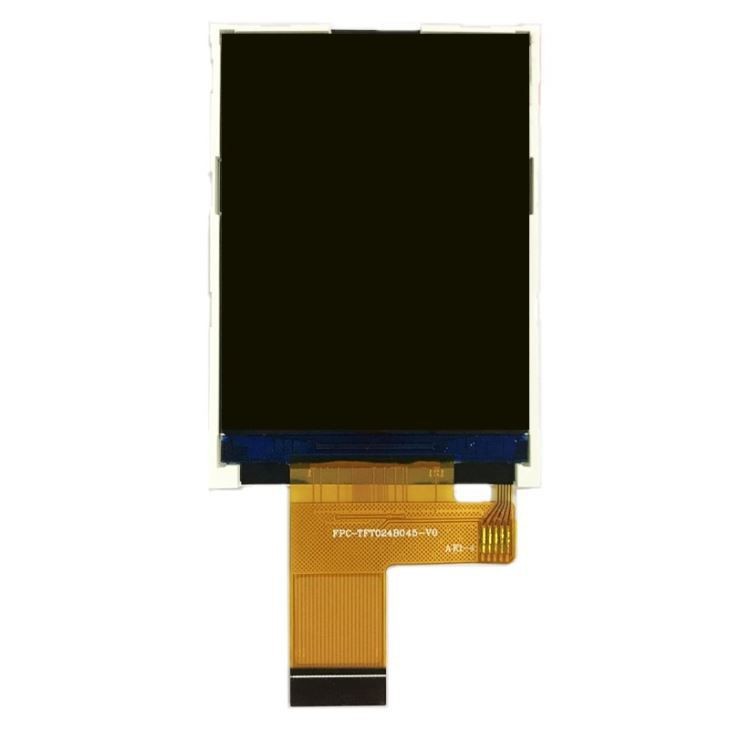
A 2.4 Inch TFT Strip Screen is even smaller than a 1.3-inch screen, but it may not offer the same level of resolution and performance. It is more suitable for applications where size is a critical factor, such as in wearable devices or small-scale VR projects.
Conclusion
In conclusion, 1.3-inch TFT square screens have both advantages and limitations when it comes to VR applications. Their compact size, high pixel density, and fast response times make them a viable option for certain types of VR experiences, such as mobile VR glasses and training simulations. However, their limited FOV, lower brightness and contrast ratio, and difficulty in integrating additional features may make them less suitable for more demanding VR applications.

If you are considering using a 1.3-inch TFT square screen for your VR project, it is important to carefully evaluate your requirements and consider the trade-offs. You may also want to explore other screen sizes and technologies to find the best solution for your specific needs.
If you are interested in learning more about our 1.3-inch TFT square screens or have any questions about their suitability for VR applications, please feel free to contact us. We would be happy to discuss your requirements and provide you with more information.
References
- "Virtual Reality: A New Frontier in Technology" by John Doe
- "The Future of Display Technology in VR" by Jane Smith
- "Comparing Screen Sizes for VR Applications" by Tom Brown